Ko Lanta Islands
Ko Lanta consists of two adjacent islands: Ko Lanta Yai (Big) and Ko Lanta Noi (Small). Ko Lanta Yai is where you’ll find many tourists, though they are tourists looking to get away from the party scene. Most of the beaches – such as Kho Kwang, Khlong Dao, Phra Ae, Khlong Khong, Khlong Nin and Ba Kan Tiang – lie in the west, can be reached by road, and offer a wide range of quaint and quiet accommodations.
While in Ko Lanta, be sure to check out Chao Le – the home of Sea Gypsies who mix very little with the general population, speak their own language and have their very own supernatural and traditional beliefs and rituals. An example of the latter is the Loy Ruea (floating boat) ceremony where the village men build a symbolic boat and place wooden statues of themselves in it along with nail pairings, hair, and rice. By performing this ritual, they ask for forgiveness from the sea gods for any wrongs that may have done to the sea. Hopefully the sea remains forgiving!
Diving and snorkeling
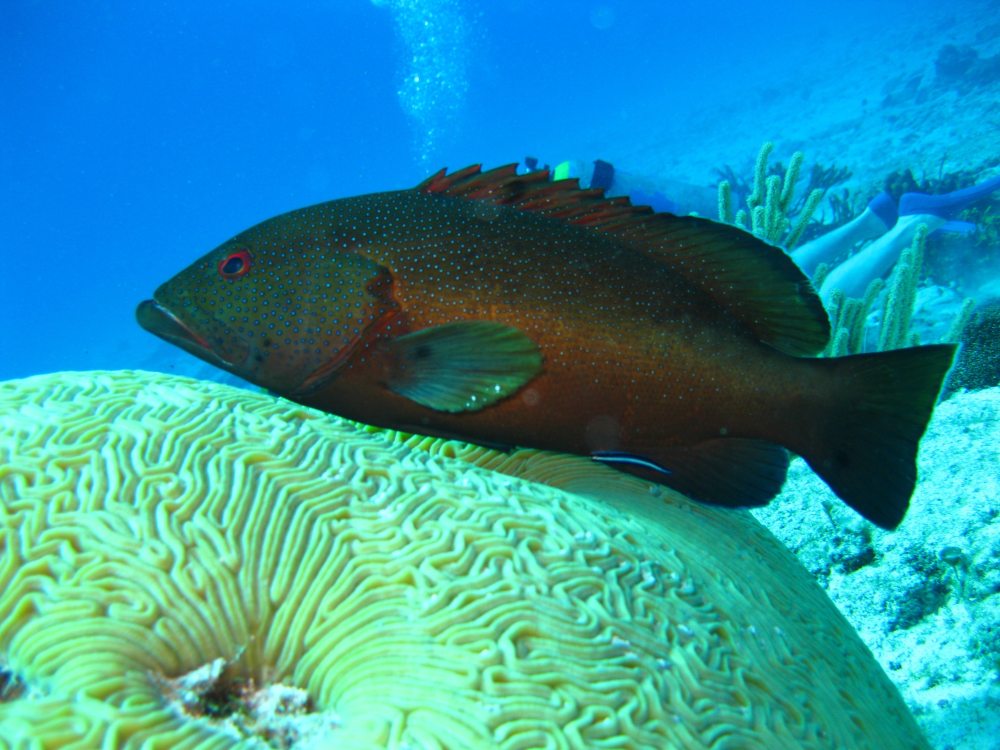
Krabi offers a great opportunity for diving due to its numerous natural marine resources which include over a hundred offshore islands! Dive shops around Rai Le and Ao Nang provide dive trips as well as rent diving and snorkeling gear at the rate of 150 Baht/ set/ day ($5CDN) with a deposit of 500 Baht ($16.60CDN).
The advantage of diving from Ao Nang is the nearby sites in the Poda Island group, where water visibility is better than that of the mainland, but not as good as Phi Phi. There are 15 dive sites off of Ao Nang, all reachable with a 20 to 60-minute boat ride. For experienced divers there is a 50-meter long cave at 5-12 meters depth at Yawabon Island behind Poda… I wish!!
The water visibility is at its best from November to April. Unlike Ko Phi Phi, some Ao Nang dive shops and operators close during low season, May to October, while some (Ao Nang Divers for instance) remain open all year long. Two local dives in the Poda/Yawasam group cost approximately 1,900 Baht ($63.30CDN). Four-day PADI open water courses have risen to 10,000 Baht ($330CDN). Though speaking from experience (snorkeling experience, that is), this is absolutely well worth the cash!
Emerald Pool
This hot spring originates from a warm stream in the lowland forest of Khao Nor Juji, which is supposedly Thailand’s last piece of virgin and fertile forest. The intensity of the pool’s turquoise colored water varies according to the light and time of the day, so if you’re determined to see the real emerald color (which you should be!), plan to visit at dawn or early in the morning. The pool, which can be visited all year round, charges and entrance fee of 20 Baht ($0.66CDN).
Ao Nang Beach
A large bay with scenic beaches and 83 small islands, Ao Nang has several famous beaches which include East Rai Le, West Rai Le, and Tham Phra Nang (cave) which stretches to the foot of a prominent limestone range.
A boat from Ao Nang Village can be hired for sightseeing excursions around Ao Nang, Hat Tham Phra Nang and Hat Nam Mao, all of which are only accessible by foot. Other offshore isles such as Ko Poda, Ko Kai, Ko Mo and Ko Thap, are popular destinations where you can be reach by renting a boat from Ao Nang.
An abundance of colorful coral reefs and lovely cartoon fishes make these islands ideal for diving and snorkeling.
Noppharat Thara Beach
Noppharat Thara Beach, located 6 kilometers from Ao Nang, is a famous 3-kilometer long white-sand beach lined with dense casuarinas (native trees) and coconut groves. The beach, paved with tiny seashells, was formerly called “”Hat Khlong Haeng””, which means dried canal beach by locals, because the canal dries up during low tide and the area turns into a long beach. Ferry services to Ko Phi Phi are provided from this beach all year round.
Canoeing and kayaking
Canoeing and kayaking are two ways to enjoy the spectacular seascape, limestone cliffs and caves in Krabi’s waters as these sports allow visitors to explore hidden offshore areas at a more leisurely pace. Canoeing and kayaking operators are available at Ao Nang.
Rai Le beach
This beach is generally divided into two sections, East and West. West Rai Le provides visitors with peace and quiet as it is a broad sandy beach with fewer facilities than Ao Nang.
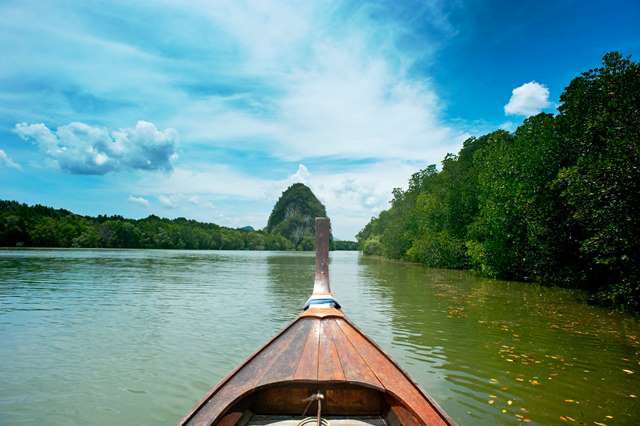
East Rai Le which lies across the peninsula from West Rai Le, and is different from other beaches in the area as it could actually be classified as a mud flat, especially during low tide. In addition to remarkable views and mangrove forests to the north of the beach, the main attraction for visitors to Hat Rai Le is the adrenaline pumping activity of cliff climbing! The limestone cliffs on the huge headland between Hat Rai La East and Tham Phra Nang, as well as other nearby islands, provide world-class rock climbing facilities against a stunning backdrop of the sea with approximately 700 sport routes of mid to high difficulty ratings.
Rock climbing
As I just mentioned, but need to mention again, apart from marine sports, Krabi is also an ideal place for rock climbing. Lines of sheer limestone cliffs along Tham Phranang and Rai Le beaches have challenged thousands of climbers from all over the world every year. The levels of difficulty of the various routes vary, so even the most inexperienced climbers can experiment. Equipment, instruction and guides are available at most lodgings.
Discover more from Jess Hunter Travel
Subscribe to get the latest posts sent to your email.
 Jess Hunter Travel